
Google unveils two more AI chips, making four TPU launches in one year
The TPU 8tx, built with AMD, locks down sensitive data while the 8i Max doubles memory for large AI workloads.
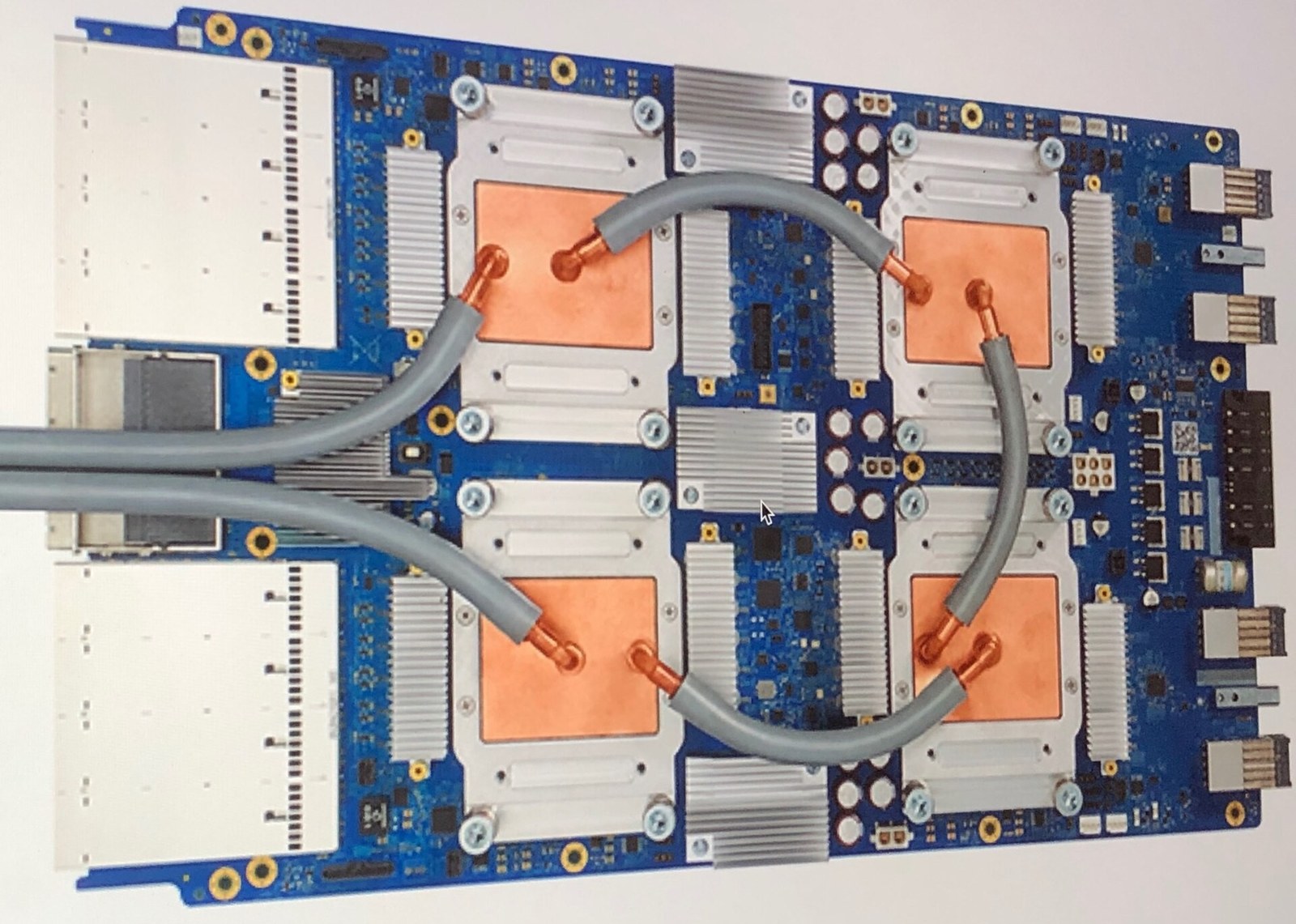
Google on Monday unveiled two new versions of its in-house AI chips, the TPU 8tx and the TPU 8i Max, giving it four eighth-generation tensor processing unit systems in a single year, the company said in a blog post by Amin Vahdat, its chief technologist for AI and infrastructure. It is the first time Google has introduced four TPU systems in one year, and the pace matters because every workload Google can move onto its own silicon is one it does not have to rent from someone else.
The launches come as the largest cloud companies race to cut their dependence on outside chipmakers. Microsoft and Amazon, along with AI labs such as OpenAI and Anthropic, are building their own AI semiconductors and software to reduce their reliance on Nvidia's dominance, TechCrunch reported. Google has a head start. It first designed TPUs more than a decade ago for its own needs, such as voice recognition and translation, and says the chips are now a fast-growing business with nearly 100 customers, including frontier labs, trading firms, retailers and universities.
The TPU 8tx is aimed at regulated companies and governments that want to run powerful models on their most sensitive data. Data is usually encrypted when it is stored or sent over a network but has to be unlocked in memory while a computer processes it. The 8tx is built on the same silicon as the TPU 8t training chip and paired with fifth-generation AMD EPYC processors, and Google says it builds security into the hardware so data and model weights stay protected even while in use.
AMD called the 8tx the first cloud TPU system to deliver hardware-enforced confidential computing in its own announcement. Its EPYC chips handle orchestration, data preparation and communication with the TPUs, and AMD's Secure Encrypted Virtualization extends protection from the processor to the attached accelerators. AMD said its EPYC processors are the host chip of choice at more than 10 leading hyperscalers and frontier AI labs. Google said the 8tx delivers up to 2x lower latency than the TPU 8t with a near-zero performance penalty for the added security.
The practical pitch is that a bank or agency could fine-tune a model on private data, distill a large model into a smaller one and train AI agents through reinforcement learning on one system, without moving sensitive data between separate clusters. Google Cloud's Mark Lohmeyer said the pairing brings "hardware-enforced confidential computing to cloud TPUs for the first time."
The TPU 8i Max solves a different problem, which Google calls the memory wall. When dozens of AI agents work across an entire codebase or hours of video, memory bandwidth becomes the bottleneck. Google's answer is to put two of its inference-focused TPU 8i chips on a single package, doubling the compute, the on-chip SRAM and the high-bandwidth memory bandwidth. Because the Max fits twice the silicon into the same rack footprint, Google says data centers can pack in significantly more computing power per square foot and per watt.
The new systems build on the TPU 8t and TPU 8i that Google introduced at its Cloud Next conference in April. Google said those chips offer up to 2.7 times better training performance and 80% better inference price performance, respectively, than the previous generation. Vahdat wrote that Google can now deliver new configurations in months rather than years because it treats each chip as a building block and changes the packaging, memory, networking and security around it.
Google is also trying to lower the barrier for developers who are used to Nvidia's software. It is adding support for PyTorch, open-source software and automated tools, part of its goal to make TPUs accessible to every developer and cloud customer.
The chip race now runs through nearly every major AI company, from the hyperscalers to model makers such as Anthropic, which set its IPO range this week. Follow the hardware fight in our Tech Sector.
Sources
- blog post · https://blog.google/innovation-and-ai/infrastructure-and-cloud/global-network/tpu-8i-max-and-8tx/
- TechCrunch reported · https://techcrunch.com/2026/11/10/google-broadens-its-ai-hardware-portfolio-with-two-new-specialized-chips/
- announcement · https://ir.amd.com/news-events/press-releases/detail/1304/amd-epyc-expands-its-leadership-at-the-foundation-of-ai
- Anthropic, which set its IPO range this week · https://1nfluenc3.com/capital/anthropic-sets-ipo-range-valuing-claude-maker-at-up-to-1-4-trillion/
- Tech Sector · https://1nfluenc3.com/tech/
- Google broadens its AI hardware portfolio with two new specialized chips | TechCrunch · https://techcrunch.com/2026/11/10/google-broadens-its-ai-hardware-portfolio-with-two-new-specialized-chips/
- Our newest TPUs: 8tx and 8i Max, built for the agentic era · https://blog.google/innovation-and-ai/infrastructure-and-cloud/global-network/tpu-8i-max-and-8tx/
- AMD EPYC Expands Its Leadership at the Foundation of AI · https://ir.amd.com/news-events/press-releases/detail/1304/amd-epyc-expands-its-leadership-at-the-foundation-of-ai
Corrections: team@1nfluenc3.com
How we source and correct: Editorial Standards. Spot an error? Corrections.