
Supreme Court signals a win for Catholic preschools against Colorado
A ruling for the Archdiocese of Denver could require religious exemptions to state nondiscrimination rules.
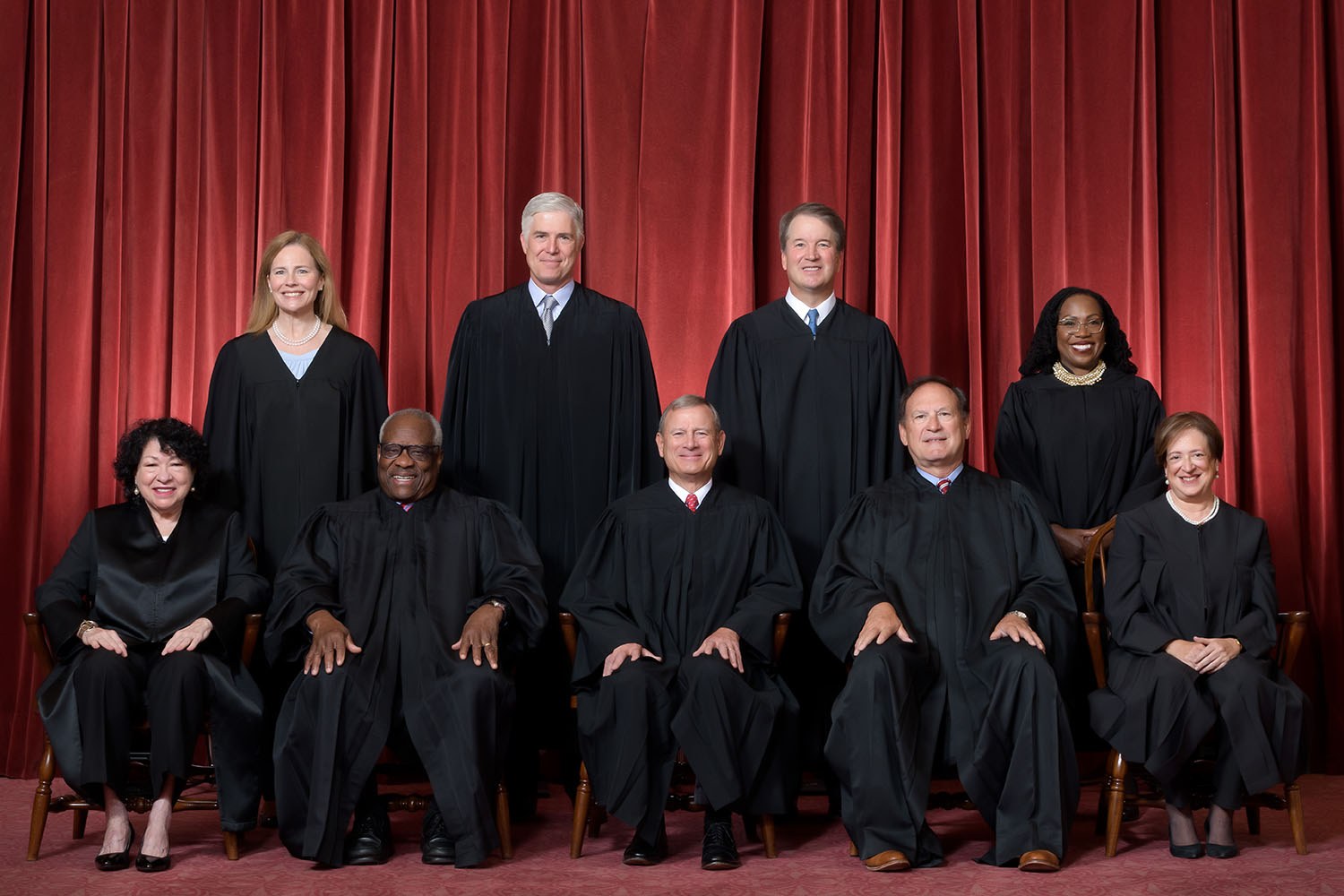
A majority of the Supreme Court appeared ready on Nov. 3 to rule that Colorado violated the First Amendment by shutting Catholic preschools out of its universal preschool program, according to SCOTUSblog's account of the argument in St. Mary Catholic Parish v. Roy.
A ruling for the schools would push the court's recent religious-funding cases a step further. In its 2022 decision in Carson v. Makin, the court struck down a Maine program that barred religious schools from public tuition money and applied strict scrutiny, the toughest constitutional test. Colorado's rule does not single out religion. The question is whether that same test applies to a nondiscrimination requirement that every participating school must accept.
Colorado launched the program in 2023. It pays for up to 15 hours a week of free preschool at participating schools, which must agree to give children an equal opportunity to enroll regardless of factors including religious affiliation, sexual orientation, gender identity, income and disability. The state says that rule bars schools from turning away LGBTQ families.
The Archdiocese of Denver, two Catholic parishes with preschools, one of which has since closed, and two parents sued, arguing that the requirement amounts to religious discrimination and that the First Amendment requires an exemption. A federal district court and the 10th Circuit rejected the claim. The justices agreed in April to hear the case, limited to two of the questions in the petition, according to the court's docket. The Becket Fund for Religious Liberty represents the challengers, and the Trump administration argued in their support.
Nicholas Reaves, arguing for the schools, told the justices that letting Catholic schools take part would create more seats for everyone. Colorado Deputy Solicitor General Helen Norton said the state welcomes religious preschools, lets them teach their beliefs and simply asks them to follow the same rules as every other school.
Several of the court's Republican appointees pressed the state. Justice Neil Gorsuch asked what would be left of earlier precedents if everything turned on express discrimination against religion. Justice Samuel Alito appeared doubtful that the legislators who wrote the program's rules did not understand their effect. Justice Amy Coney Barrett asked why Colorado could impose a condition it knew religious schools could not accept, citing a New York Times op-ed by law professor Aaron Tang that suggested states use nondiscrimination rules to blunt Carson. Norton said there was no evidence of the legislature's motives and that the requirement predated religious schools' inclusion in the program.
Chief Justice John Roberts first questioned whether Carson governed, since Maine's law explicitly targeted religious schools. He later told Norton that the effect of Maine's law was much the same as Colorado's and said the state was trying to bury Sherbert v. Verner, a 1963 precedent on religious exercise and public benefits.
Justice Brett Kavanaugh took a practical line, asking why the state would not “seek the win/win” when more than 2,000 preschools take part in the program, leaving room for religious schools and for LGBTQ parents to find a good fit.
The court's Democratic appointees were skeptical. Justice Elena Kagan said the challengers were asking for a ruling that went far beyond the court's earlier cases and called the dispute a case of a state trying to enforce its own nondiscrimination principles. Justice Ketanji Brown Jackson said the schools wanted to exclude families when no other participating school did. Justice Sonia Sotomayor asked whether a ruling for the schools would also let a religious preschool turn away Black children. Reaves said it would not, pointing to a 1983 decision upholding the IRS's revocation of tax exemptions for schools with racially discriminatory admissions policies.
By the end, Sotomayor said that “there will be tremendous problems and a great cost to someone” no matter which line of cases the court follows.
The court could apply strict scrutiny itself or send the case back to the lower courts to do so. A decision is expected next year. More Supreme Court coverage, including the justices' Nov. 6 decision to hear a Goldman Sachs bankruptcy arbitration case, is in 1NFLUENC3's Law Sector.
Sources
- SCOTUSblog's account · https://www.scotusblog.com/2026/11/court-seems-poised-to-side-with-catholic-preschools-in-religious-discrimination-dispute/
- docket · https://www.supremecourt.gov/docket/docketfiles/html/public/25-581.html
- Law · https://1nfluenc3.com/law/
- Court seems poised to side with Catholic preschools in religious discrimination dispute · https://www.scotusblog.com/2026/11/court-seems-poised-to-side-with-catholic-preschools-in-religious-discrimination-dispute/
- Docket for 25-581 · https://www.supremecourt.gov/docket/docketfiles/html/public/25-581.html
- Docket for 25-1408 · https://www.supremecourt.gov/docket/docketfiles/html/public/25-1408.html
Corrections: team@1nfluenc3.com
How we source and correct: Editorial Standards. Spot an error? Corrections.