
Rivian's RJ Scaringe bets on R2 and autonomy with shares 80% below IPO
R2 became Rivian's best seller last quarter, but Georgia plant costs and autonomy spending keep funding in focus.
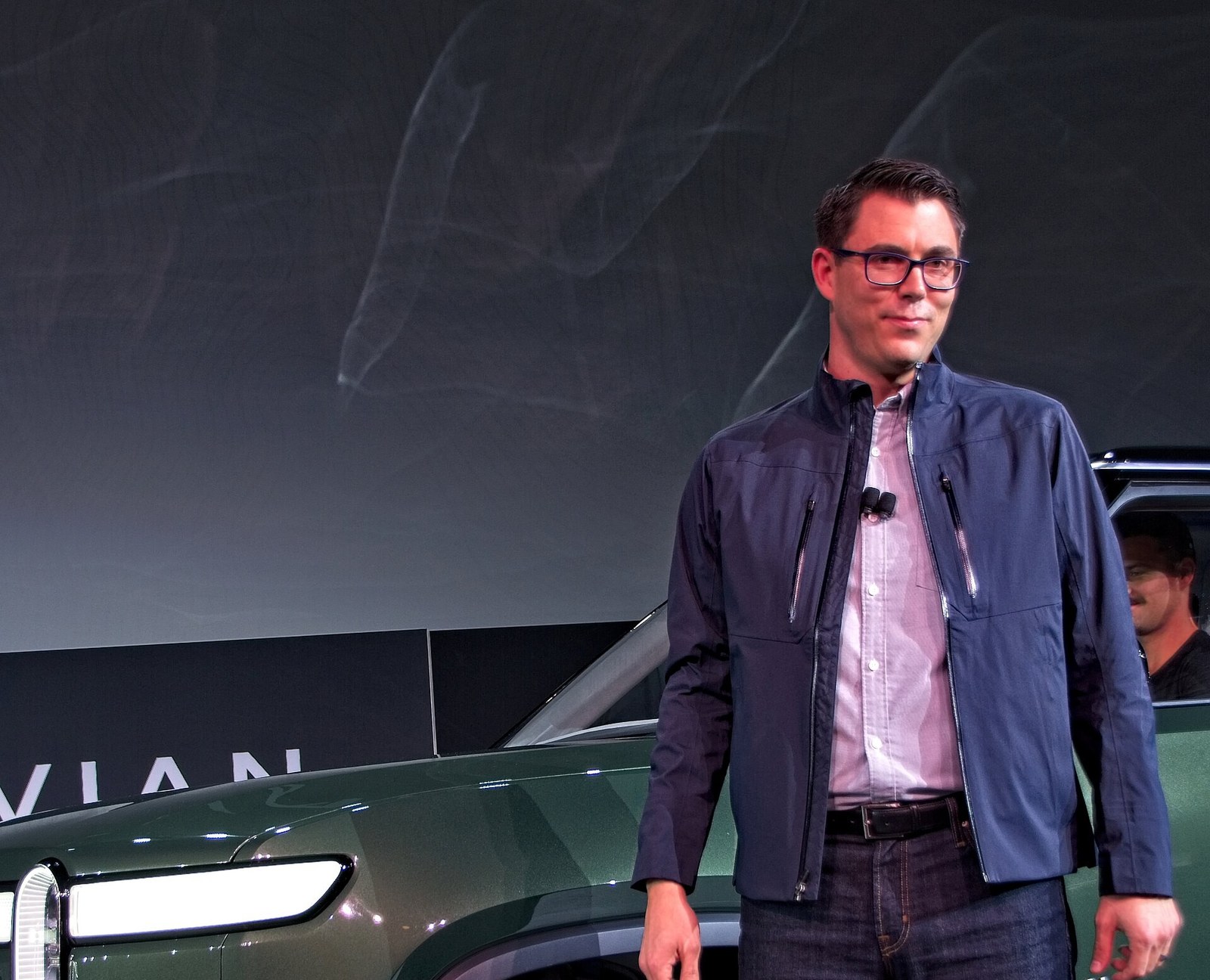
Rivian chief executive RJ Scaringe is betting that the R2 SUV and self-driving software will make 2027 the year the electric-vehicle maker turns a corner, he told CNBC in an exclusive interview on the fifth anniversary of the company's stock market debut.
The anniversary is a sobering one for shareholders. Rivian listed on the Nasdaq at $78 a share on Nov. 10, 2021, at the height of the EV boom. The stock is down more than 80% since, including a decline of nearly 30% this year, CNBC reported. Most of the peer group that went public in the early 2020s no longer exists, which still leaves Amazon-backed Rivian as the most promising EV maker of that class.
Scaringe acknowledged the setbacks, from supply chain shortages to geopolitical tensions and slower-than-expected consumer adoption of electric vehicles. "2027 is really an inflection year for us," he said.
The bet rests on R2. The midsize SUV is meant to take the brand into the mainstream market, with cheaper trims due to arrive through late 2027, The Verge reported. Rivian delivered a record 19,248 vehicles in the third quarter, up 46% from a year earlier, and R2 was already its best-selling vehicle by volume, outselling the flagship R1 models and the commercial van. "The path to profitability, the path to very significant growth in revenue is all built around R2," Scaringe said.
The early numbers are moving the right way. Rivian said its automotive cost of goods sold per vehicle improved by more than $12,000 from the prior quarter, helped by a richer R2 mix and better leverage on fixed costs. Revenue rose 38% to $2.155 billion in the third quarter, and consolidated gross profit reached $176 million. The split shows where the money is made. The automotive business posted an $80 million gross loss, while software and services produced $256 million of gross profit at a 42% margin, much of it from licensing Rivian's technology to Volkswagen, according to The Verge.
Capacity is the next constraint. Rivian's only plant, in Normal, Illinois, can build 215,000 vehicles a year, including up to 155,000 R2s. A multibillion-dollar factory under construction in Georgia is designed to add up to 300,000 units a year once its first phase is finished in late 2028. Scaringe has said that plant is necessary to reach the volumes needed for net profitability.
That buildout is the crux of the investor debate. Several Wall Street analysts expect Rivian's investment needs to rise sharply in 2027 as spending on autonomy and the Georgia factory climbs alongside continued cash burn. Deutsche Bank analyst Edison Yu wrote in an Oct. 30 note that funding has long been a key debate for Rivian investors.
Rivian ended the third quarter with $5.5 billion in cash, cash equivalents and short-term investments. It expects total available future liquidity of about $13 billion once credit lines, partnerships with Volkswagen and Uber and a $4.5 billion U.S. Department of Energy loan for the Georgia plant are counted. Scaringe said the company will be opportunistic about raising more capital, as it has done before through equity deals with Volkswagen and Uber, while staying focused on profitability.
Autonomy is the second leg. Rivian plans to roll out point-to-point driving, in which the vehicle drives itself from one destination to another while the driver monitors, first to employees and then to customers over the coming weeks and months, with a broader release in 2027 and autonomous vehicles with Uber expected by 2028. U.S. EV leader Tesla is currently the only automaker offering that capability. Scaringe said matching Tesla would be a starting point for a fairer comparison rather than the finish line, and that Rivian aims to exceed it by using multiple sensor types to see better in bad weather.
He expects self-driving to become one of the top two purchase considerations for most car buyers, up from roughly 10% of buyers who rank it among their top five today. Rivian plans to lay out more of its AI and autonomy strategy at its second annual investor technology event on Dec. 9. TD Cowen analyst Itay Michaeli called the event a likely positive catalyst.
Analysts are cautiously optimistic. The stock carries an overweight rating and a consensus target price of $17.70, according to FactSet estimates compiled by CNBC, about 26% above Monday's close and still far below the $78 IPO price. For more on carmakers' bets, see the Capital Sector.
Sources
- exclusive interview · https://www.cnbc.com/2026/11/10/rivian-r2-autonomy-2027-rj-scaringe.html
- The Verge reported · https://www.theverge.com/transportation/1022420/rivian-q3-earnings-r2-sales-volkswagen-software
- Tesla · https://1nfluenc3.com/tech/tesla-will-refund-many-cybertruck-deposits-as-musk-shifts-the-line-to-cybercab/
- Capital Sector · https://1nfluenc3.com/capital/
- Rivian CEO says new R2 SUV, autonomy make 2027 an ‘inflection year’ as EV maker marks five years since IPO · https://www.cnbc.com/2026/11/10/rivian-r2-autonomy-2027-rj-scaringe.html
- Rivian’s R2 is officially its best-selling vehicle · https://www.theverge.com/transportation/1022420/rivian-q3-earnings-r2-sales-volkswagen-software
Corrections: team@1nfluenc3.com
How we source and correct: Editorial Standards. Spot an error? Corrections.